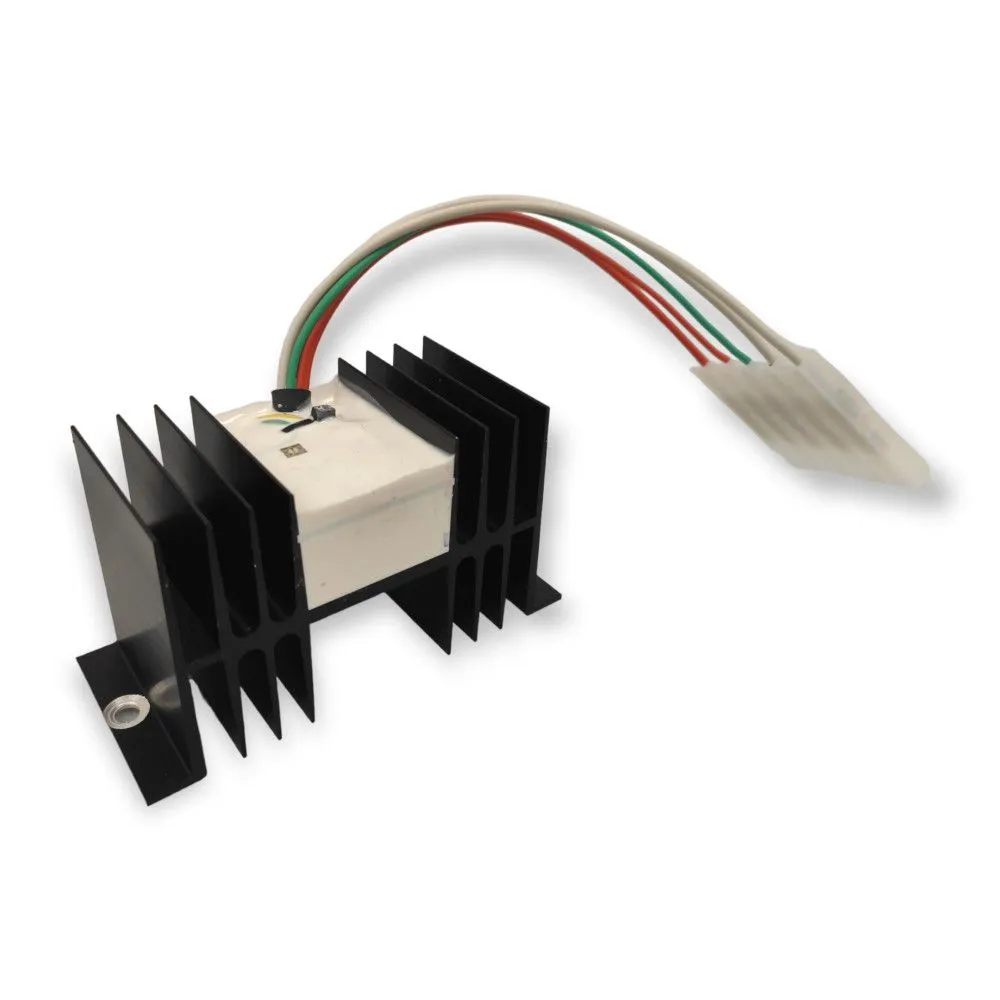
SB-9
Home Up Feedback Ilec (Deutsch)


Up


SB-9 Audiovariometer with emergency battery

Instruction Manual

The small audiovario SB-9 has been built as a vario with the small size (according to the 5 ž inch air norm) in order to save space. Current consumption is so low that the small accumulator, mounted externally on it’s back, is capable to supply the instrument with current for up to 10 hours.

This way the vario can also serve as an emergency variometer, in case the onboard line should fail to supply power, apart from it’s normal service during which it is being supplied by the on board line. In contrast to a mechanical emergency vario it will deliver an acoustic signal - even in the unexpected situation of a failure of the onboard line.

For the emergency accumulator to be always ready for service, it is being recharged from the onboard line permanently.

Particularities:

  • Operation normally from 12 V onboard supply line, should this fail, it can be switched to it’s own emergency accumulator.
  • Runs for about 10 hours in the emergency mode, at low volume.
  • After power consumption of about half the emergency accumulator’s capacity, the audio generator is switched off automatically (depending on volume: 1 to 3 hours running) to safeguard another 5 hours of - quiet - operation
  • When run from the onboard supply line the instrument offers 2 different types of response, the fast 1s and the 3s response. When running on it’s own accumulator, the 3s response is used.
  • The emergency accumulator is permanently charged from the onboard supply line, is therefore always charged.
  • Fits in 57 mm standard cut off. Depth behind panel is 115 mm. Weight is 500 grams. Mounting of the flask behind the instrument panel is very easy thanks to it’s small size (60 x 60 x 78 mm)

Principle of measurement

The transducer is a thermal flow measurement device using thermistors at constant temperature, developed by ILEC. It offers an excellent stability of zero output, a very short response time of 5 milliseconds, and strong independence of calibration of changes in temperature of the instrument. It ensures the instruments famous high precision.

Signal conditioning

The raw variometer signal coming from the transducer is fed to two different electronic filters in parallel. With the help of the V1 / V2 - filter switch, the display (visual and acoustic) can alternatively be switched to one of the following filters:

V1: 3-sec-filter: first order filter with a response equivalent a good moving vane type

V2: 1-sec-filter: second order filter with a fast, however strongly damped response. In the emergency case only the 3-sec-filter is available.

Audio generator

Visual meter indication is important but the audio provides the heart of the SB-9. The base frequency of the audio signal increases exponentially with vertical speed. Itīs base pitch is modulated by a slow frequency which varies with the rate of climb. At zero climb this frequency is reduced to zero producing a continuous tone. In sink the modulation frequency is constant at 1 per second. This double tone ILEC audio is a delight to listen to, providing instant information on rate of climb or sink between +/- 30 kts. This wide range provides accurate information in the weakest and strongest thermals.

Altitude error

The calibration factor of the variometer depends on air density and therefore on altitude. When measuring the actual vertical speed, the indicated value decreases at 5% per 1000 meters increase in altitude. In the altitude range from 200 to 2200 m NN the altitude error remains within +/- 5%, at 1200 m NN , the calibration altitude, the error is zero.

Technical Data:

Supply Voltage: 10 to 15 Volts

Consumption: 10mA up to 30 mA, depending on audio volume

Dimensions: 61 x 62 x 115mm (fits in 57mm standard cutout)

Weight: 0.5 kg

Temp. Range: -20 to + 60 deg C
Measurement: +/- 30 kts
Audio: +/- 30 kts
Meter: +/- 10 kts

Zero Accuracy: +/- 0.3 kts from -20 to + 50 deg C
Calibration: Measurement: +/- 2%
Meters: +/- 3%

Altitude: 0 to 45000ft

Installation

When choosing the place where the instrument is to be installed the following point should be taken into account:

  • Since the variometer is read rather frequently, the instrument should be placed at the upper rim of the instrument panel.
  • If a compass is installed in the panel, all other non magnetic instruments should be grouped around it (altimeter, air speed indicator, moving vane variometer), all electrical instruments at a distance of at least 10 to 15 cm. The same applies to a compass mounted on the cover over the panel: the speaker at the rear end of the instrument may disturb in this case.
  • During transport, take off and landing, the glider will be submitted to rather severe shocks which should be kept off all instruments. Contrary to a widespread opinion, the best suspension is the one that will link all instruments to the primary structure of the fuselage in the most r i g i d way. For this reason instrument panels should be designed for maximum rigidity and linked to the fuselage in the most rigid way.

Panel cutout:

Figure 1 shows the dimension of the 80-mm- and 57-mm-openings to be machined in the panel. If they are not yet there, work with precision. It must be possible to insert the instrument and in particular the bolts freely without any jamming, otherwise the nut inserts may be damaged. Fixing bolts delivered are M4x10, non magnetic, black, Phillips-head 3.

Figure 1: Opening in the instrument panel

Dimensions in mm, dimensions in brackets for 57-mm-cutout

Variometer flask:

  • The flask is being mounted behind the instrument panel. The flexible silicon connecting tube is delivered with the instrument, it may be shortened at will.

Electrical connection:

  • Connect the blue wire to battery ground, the red wire to battery plus 12VDC

Pneumatic installation:

  • Connect the total energy pressure to the large nipple, the variometer flask to the small one.

Basic operation

Upper button: Volume control.

Lower button: Select switch position 1: OFF

position 2: V1 normal 3-sec-variometer

position 3: V2 fast 1-sec-variometer

position 4: RES normal 3-sec-variometer

emergency battery in use

Charging the emergency battery:

The emergency accumulator is permanently being recharged from the onboard supply. The position of the select switch is of no importance. But for this instance the main power supply must be switched on, the SB-9 must be connected to the onboard battery.

Operation with emergency battery:

The automatic supervisor cicuit will switch off the SB-9 upon the supply voltage becoming too low. This happens in 3 steps:

When operated with audio signal, the running time depends on volume setting. With medium volume setting, there will be about 3 hours operation with audio signal, afterwards about 5 hours without audio. With full audio signal you will have about 1 hour operation with audio and afterwards 5 hours without. The SB-9 operates about 10 hours without audio signal in the RES setting. The SB-9 is switched off automatically when the emergency battery voltage falls below 7.7V, to prevent overdischarging and damaging this accumulator.

Maintenance

SB-9 adjustments

The audio basic and modulation frequency can be adjusted to personal preference by two potentiometers. These are accessible from the top after removing the instruments case.

The zero of the variometer signal can be adjusted by a - non laquered - potentiometer accessible from the bottom side. Do not remove the laquered potentiometer.

Emergency accumulator

The emergency battery is a NiCd accumulator and should be renewed after 5 years. Only use a type like VARTA TR 7/8 for this purpose.

CAUTION: Never use non rechargeable primary batteries, they may blow up when being charged.

The lifetime of this accumulator will be extented, when being discharged twice a year. Therefore we recommend the SB-9 to be switched to the emergency mode (RES) for at least 10 hours, main battery off, to discharge ist accumulator. Donīt forget charging afterwards.